

Most AI presentation tools were designed for startup founders pitching investors or sales teams running demos. Teachers have a different problem: they need to explain a concept clearly, match the right reading level, and do it for the third time this week because each class needs fresh material.
The good news is that AI has gotten genuinely useful for this. The bad news is that most roundups lump every tool together without asking whether it actually works for classroom prep.
This article cuts through that. Here is what matters when picking AI presentation software for teaching, what to avoid, and how to build a slide deck in under a minute when you have a lesson to run.
What Teachers Actually Need From an AI Slide Tool
Before picking any software, it helps to be specific about the job. Teachers preparing presentations are not trying to impress a boardroom. The requirements look more like this:
Speed over polish. A teacher with 45 minutes between classes cannot spend 30 of them formatting slides. The tool needs to produce a usable first draft fast.
Simple inputs. The best input is whatever the teacher already has: a topic name, a PDF chapter, copied notes, a lesson objective. Requiring a carefully crafted prompt adds friction that defeats the purpose.
Editable output. AI-generated slides are always a starting point. The tool needs to make editing easy — changing a headline, swapping an image, reordering slides — without forcing a full regeneration.
Readable at a distance. Slides projected in a classroom need to be readable from the back row. Font size, contrast, and layout clarity matter more here than in a PDF report.
Export that works. Teachers work across PowerPoint, Google Slides, and PDFs. Whatever the tool produces needs to come out in a format that works with what the school uses.
Anything that requires a long learning curve, forces a paid subscription for basic exports, or produces slides that look like marketing materials is the wrong tool for the job.
The Problem With Most AI Presentation Tools
Search for “AI presentation software for teachers” and you will find the same eight tools reviewed against the same six criteria, ranked by companies that have affiliate relationships with the tools they recommend.
Most of those tools share a core limitation: they were built for business users first. The output defaults to corporate aesthetics — dark backgrounds, bullet points that sound like quarterly reports, stock photos of people shaking hands in conference rooms.
Teachers end up spending time undoing the tool’s defaults instead of using the actual time savings. That defeats the point.
A second problem is signup friction. Many tools require an account, a verified email, and sometimes a school domain to access even the basic tier. For a teacher who just wants to try it before their next class, that wall is too high.
The third issue is output quality on educational topics. A tool tuned on corporate content tends to produce thin, surface-level slides when asked about the American Revolution or cell mitosis. The structure is there but the substance is not.
What Good AI Presentation Software Does Differently
The tools that work well for teachers share a few specific traits:
They handle text-heavy inputs. A teacher can paste in lecture notes, upload a PDF chapter, or link to a reading — and the AI extracts the key points and structures them into slides. This is different from a tool that only works if you type a short topic keyword.
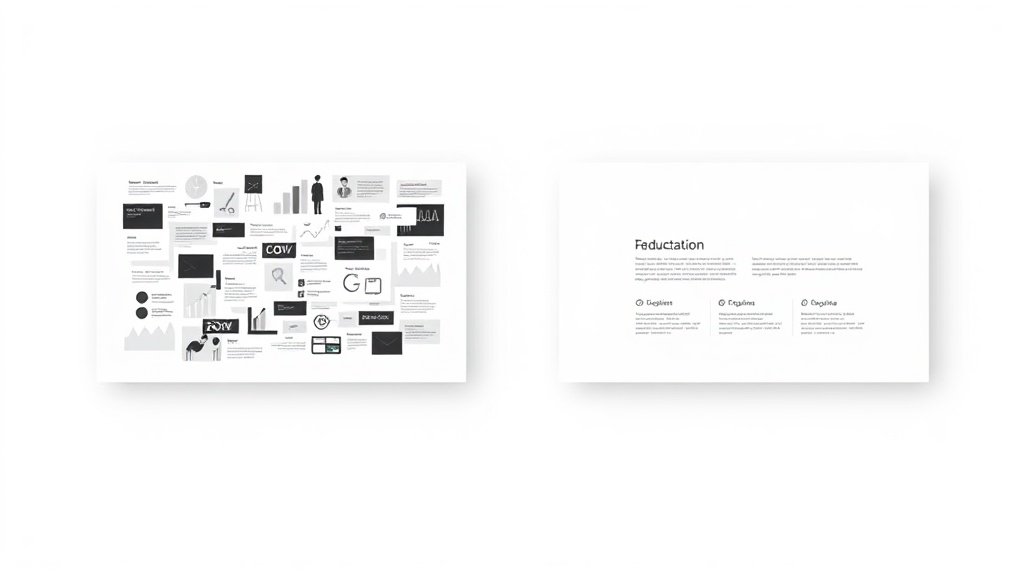
They produce appropriately simple slides. Educational slides should not be busy. One main point per slide, a supporting visual or diagram, and readable text. Good tools default to this; bad tools need to be coaxed into it.
They allow partial edits. The ability to regenerate one slide without touching the rest is underrated. Teachers often have 80% of a deck that works and one slide that needs a different explanation or example.
They do not require expertise. A history teacher should not need to know prompt engineering to get useful slides. The tool should work from natural language and produce sensible results on the first try.
SlideMaker hits these criteria. Type a topic, paste in notes or upload a document, and the AI generates a structured slide deck in under a minute. No account required to start. Output is clean, text-forward, and editable immediately after generation. Export goes to PowerPoint or PDF.
For teachers who regularly convert documents and notes into presentations, this is the more direct workflow: the source material goes in, the structured deck comes out.
How to Build a Classroom Slide Deck With AI
Here is the practical process, whether you use SlideMaker or any other tool in this category.
Step 1: Start with what you already have.
Do not write a new prompt from scratch. Take the lesson objective you already have and paste it directly. If you have a PDF chapter, upload it. The more context the AI has, the less you will need to correct.
Step 2: Review the structure before looking at the design.
Check whether the AI organized the content logically — introduction, core concept, examples, summary. If the structure is wrong, fix that first before spending time on individual slides.
Step 3: Adjust the specific slides that need it.
Most tools will get 70-80% of the deck right on the first pass. Target the slides that missed the mark: wrong emphasis, missing example, unclear language. Regenerate those specifically.
Step 4: Check for classroom readability.
Read the slides as if you are standing at the back of the room. Text should be large enough to read without straining. Each slide should have one clear takeaway, not a paragraph of information.
Step 5: Export in the format your school uses.
PowerPoint for Windows-based classrooms, PDF for print distribution, or keep it in the tool if you are presenting directly from a browser.
The whole process, when the tool is working well, runs 5-10 minutes for a 15-slide deck. That is a real time saving for a teacher who previously spent 45-60 minutes formatting slides manually.
How Teachers Are Using This in Practice

The time savings show up most clearly in two scenarios:
Lesson modification. A teacher has a slide deck from last semester. The content is still accurate but needs updating — new examples, different framing for a changed curriculum standard, or adjustments for a different student group. AI can take the existing deck and produce a revised version in minutes rather than requiring a full rebuild.
Multi-class differentiation. Teachers running the same subject at different grade levels often need the same content explained at different complexity levels. AI can produce two versions of the same deck — one for an introductory class, one for advanced students — faster than manually rewriting each slide.
For teachers who also help students with their own presentations, it is worth noting that SlideMaker’s approach to student projects follows the same pattern: topic in, slides out, immediately editable without an account.
The time savings from AI presentation tools are most significant for users who make presentations frequently — and teachers are among the highest-volume presentation creators of any professional group.
What to Look for When Comparing Tools
If you are evaluating AI presentation software for classroom use, ask these specific questions:
Can it handle document uploads? Topic-only tools are limited. If the tool cannot take a PDF, Word doc, or text paste as input, it will require extra work on every use.
Does it need an account to try? Tools that wall off basic functionality behind a signup are harder to recommend to a department or include in a school workflow. Try before committing.
How easy is it to edit individual slides? Click into a slide, change a line of text, done — that should take two seconds. If the tool requires re-prompting or a regeneration to make a small change, editing will be slow.
What does the output look like on a projector? Run the tool on a test topic and project the result. Fonts should be large, contrast should be high, and the layout should not look like a PDF report in slide form.
What formats does it export? PowerPoint, PDF, and Google Slides are the three relevant formats for most schools. Verify before committing to a tool.
The full comparison of AI presentation tools in 2026 goes deeper on specific features if you want to evaluate more options against these criteria.
FAQ
Does AI presentation software work for all subjects?
Yes, with one caveat: results are better when the input is richer. For STEM subjects with formulas or diagrams, pasting in written explanations of the concept works better than a single topic keyword. For humanities subjects, the tools generally produce solid first drafts from a topic alone.
Can teachers use these tools without creating an account?
Some tools allow this, some do not. SlideMaker does not require account creation to generate and download a presentation. You can test it directly at slidemaker.app/create.
Are AI-generated slides accurate enough to use in class?
AI tools can produce factually wrong slides, particularly on specific dates, statistics, or specialized topics. Always review the content before presenting. Use AI for structure and speed, then verify the facts.
Can students use the same tool for their own projects?
Yes. The tool does not distinguish between teacher and student use. If anything, having students use the same tool is useful for teaching presentation structure — they can see how AI organizes information and then decide whether they agree with that organization.
How long does it take to generate a slide deck?
On SlideMaker, under a minute for a 10-15 slide deck from a topic or document. Editing typically adds another 5-10 minutes depending on how much adjustment is needed.
The Bottom Line
AI presentation software is genuinely useful for teachers, but the category is cluttered with tools built for a different audience. The things that matter for classroom use — document inputs, clean simple layouts, no-friction editing, and readable output — are not universal across every tool that markets to educators.
SlideMaker handles the core workflow: paste or upload your source material, get a structured deck in under a minute, edit what needs changing, export in the format you need. No account required to start, no subscription required to download.
For the time it takes to run a lesson on a typical week, having a faster slide-building workflow is one of the more practical changes a teacher can make to their prep routine.